Weavelinx

Blog

Your blog category

Benefits of content marketing
Blog

Benefits of Content Marketing for Sustainable Growth

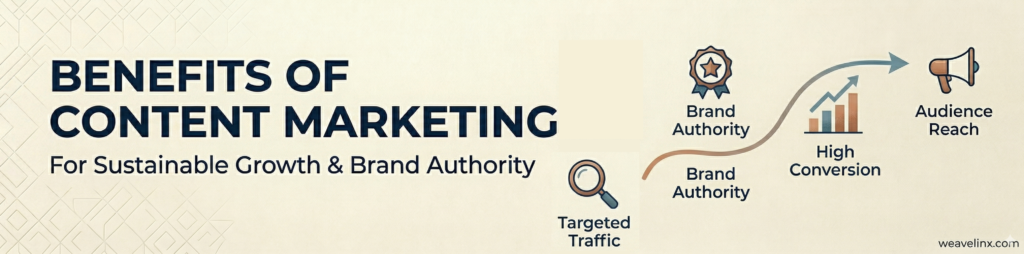
Most businesses publish content. Few see real returns. If your blog isn’t generating traffic, leads, or sales, the issue isn’t effort — it’s strategy. The real benefits of content marketing show up when content aligns with search intent, buyer stages, and measurable KPIs. At Weavelinx, we treat content as an acquisition asset — not a publishing exercise. Done right, it compounds traffic, trust, and conversions over time. Let’s break down what that actually means. What Is Content Marketing and Why It Matters Content marketing is the strategic creation and distribution of valuable content to attract and retain a clearly defined audience. Instead of interrupting people with ads, it answers questions, solves problems, and builds trust. Here’s why it matters now more than ever: The global content marketing industry is projected to exceed $107 billion by 2026. It generates 3x more leads than traditional marketing while costing 62% less. 90% of marketers use social platforms to distribute content. This shift isn’t a trend. It’s how modern buyers research and choose vendors. If you’re building long-term visibility, content is the engine. Key Benefits of Content Marketing 1. Boosts Brand Awareness Content increases visibility across search engines, social media, and email. When you publish helpful, optimized articles: Your pages rank for more keywords Your brand appears in solution-driven searches Prospects discover you earlier in the buying cycle Unlike ads, content doesn’t stop working when the budget pauses. Evergreen posts continue bringing traffic months — even years — later. Result: More impressions. More recognition. More top-of-mind presence. 2. Generates Leads and Conversions One of the strongest benefits of content marketing is its impact on lead generation. Educational content guides prospects through the funnel: Awareness → Blog posts Consideration → Case studies, comparisons Decision → Demos, landing pages Helpful content reduces hesitation. It builds confidence before the sales call even happens. Well-structured articles with CTAs, internal links, and proof points consistently convert better than sales-heavy pages. If you’re building a structured funnel, your content strategy must align with your service positioning. Explore how we implement this through our SEO and content services. 3. Improves SEO and Organic Traffic Content is the backbone of SEO. Search engines rank pages based on relevance, structure, and usefulness. Without strong content, even technically sound websites struggle to rank. Here’s what optimized content does: Targets long-tail and transactional keywords Builds topical authority Earns backlinks naturally Improves dwell time and engagement If you want a deeper breakdown, read our guide on The Power of Keywords and Content in SEO. Consistent publishing also increases indexed pages — giving search engines more entry points to your site. Outcome: Lower acquisition cost. Higher quality traffic. 4. Establishes Thought Leadership Buyers trust expertise. Publishing in-depth guides, case breakdowns, and industry insights positions your brand as a reliable source — not just a vendor. Thought leadership content: Builds authority in niche markets Attracts partnerships and backlinks Influences decision-makers earlier As Seth Godin famously said, “Content marketing is all the marketing that’s left.” When your content educates before it sells, it earns credibility. 5. Engages and Retains Your Audience Content marketing doesn’t just attract visitors — it keeps them engaged. Formats like: Blog posts Case studies Videos Infographics Interactive quizzes allow audiences to learn in different ways. Data shows content with visuals is 323% more likely to drive action. Weekend posts receive 27% more interaction. Engagement signals matter for SEO and conversions. When readers spend more time on your site, explore multiple pages, and return later, it compounds your authority. You can use sites like blogger.com for blog posts. 6. Cost-Effective and Long-Term Paid ads deliver quick results. Content builds lasting value. While content takes time to gain traction, the long-term ROI is stronger: Paid Ads Content Marketing Stops when budget ends Compounds over time Rising CPC Lower long-term cost Transactional focus Relationship-driven Yes, content requires consistency and effort. But once ranking pages mature, they drive predictable inbound traffic without increasing spend. For SMEs and startups, this makes content one of the most sustainable growth channels. How to Leverage Content Marketing Effectively Knowing the benefits isn’t enough. Execution matters. Here’s a practical framework: 1. Create Content Around Search Intent Focus on real user queries: What problems are buyers searching for? What objections delay decisions? What comparisons influence choice? Build topic clusters instead of isolated posts. 2. Align Content With Funnel Stages Map content to: TOFU (Top of the Funnel – Awareness) – Traffic-driven education MOFU (Middle of the Funnel – Consideration) – Trust-building proof BOFU (Bottom of the Funnel – Decision/Conversion) – Conversion-focused pages Internal linking helps move users forward naturally. 3. Measure What Actually Matters Track: Organic traffic growth Keyword rankings Conversion rate Time on page Assisted revenue Traffic alone isn’t success. Qualified traffic is. 4. Distribute Consistently Publishing is half the job. Repurpose articles into: LinkedIn posts Email newsletters Short videos Infographics Distribution amplifies reach and engagement. If you’re publishing consistently but not seeing measurable results, your structure might be the issue. Weavelinx builds content systems designed for rankings and leads, not vanity traffic. 👉 Explore our approach to growth-focused execution on our Insights blog or connect with us to build a strategy that compounds. Common Questions About the Benefits of Content Marketing How long does it take to see results? Most businesses see measurable SEO impact within 3–6 months. Competitive niches may take longer. Is content marketing better than paid ads? They serve different roles. Ads generate immediate traffic. Content builds long-term acquisition assets. Can small businesses benefit from content marketing? Yes. In fact, smaller businesses often compete effectively using niche-focused content strategies. What metrics prove content marketing ROI? Organic traffic growth, lead conversion rate, assisted revenue, and customer acquisition cost reduction. Challenges to Keep in Mind Content marketing is powerful — but not instant. Common challenges include: Delayed results Ongoing content production effort Topic fatigue Measuring brand impact The key is consistency and strategy alignment. Why Content Marketing Is Worth It The benefits of content marketing extend beyond traffic. It: Builds brand

What is seo and how it works
Blog

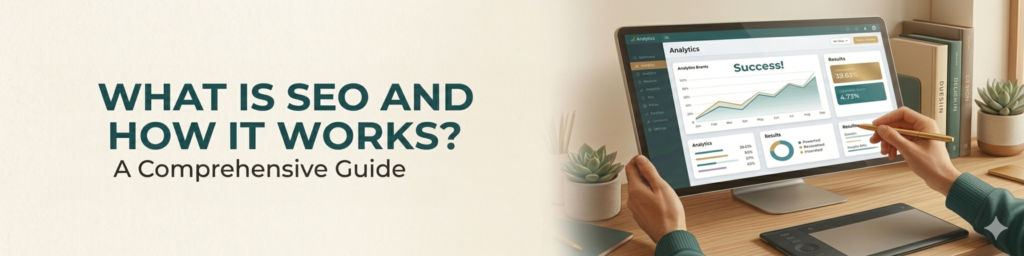
What Is SEO and How It Works?

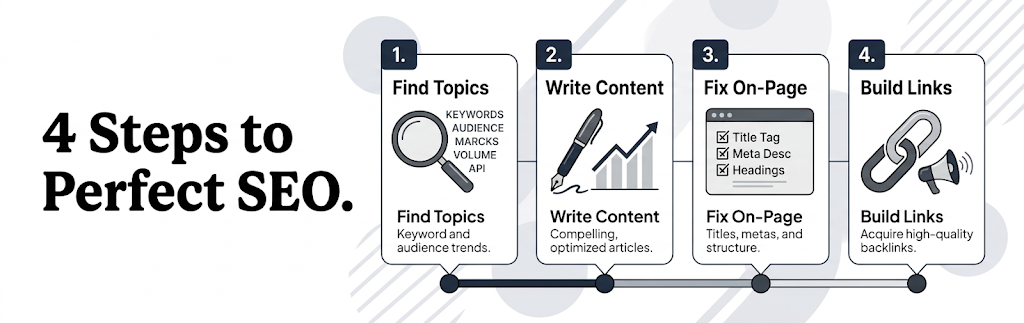
If your website isn’t showing up on Google, you’re missing ready-to-buy traffic. That’s where SEO (Search Engine Optimization) comes in. Understanding what is SEO and how it works helps you attract consistent, high-intent visitors without paying for every click. At Weavelinx, we treat SEO as a compounding system—clean code, clear structure, and content built around real search demand. Let’s break it down in plain terms. What Is SEO? SEO stands for Search Engine Optimization. It’s the process of improving your website so it appears higher in organic (non-paid) search results. When someone searches on Google, the search engine: Crawls web pages Indexes content Ranks pages based on relevance and authority SEO helps your site meet those requirements. Key goal: Make your website easy to find, understand, and trust. Google processes over 8.5 billion searches per day, and more than 25% of users click the first result. Ranking higher directly impacts traffic and leads. Main Elements of SEO SEO isn’t one tactic. It’s a combination of systems working together. 1. Keyword Research Keywords are the search terms users type into Google. Good keyword research helps you: Understand search intent Find demand-driven topics Build content that answers real questions Example: Instead of targeting “scissors,” you might target: “Are safety scissors dangerous?” “How to sharpen safety scissors?” Tools you can use: Google Keyword Planner Ubersuggest Google Search Console For deeper strategy, see our guide on The Power of Keywords and Content in SEO:https://weavelinx.com/the-power-of-keywords-and-content-in-seo-a-complete-guide/ 2. On-Page SEO On-page SEO improves elements directly on your website. This includes: Title tags Meta descriptions Headings (H1, H2, H3) Internal linking Content quality Image alt text Important: Avoid keyword stuffing. Google values clarity and usefulness over repetition. 3. Off-Page SEO Off-page SEO focuses on authority. This mainly involves: Backlinks from trusted websites Brand mentions Community engagement It’s estimated that nearly 75% of SEO impact comes from off-page signals like backlinks. If respected websites link to your content, Google sees your site as more credible. 4. Technical SEO Technical SEO ensures search engines can access and understand your site. It covers: Page speed Mobile responsiveness HTTPS security Structured data (schema) Crawlability A slow or poorly structured site can block rankings—even with great content. Learn more here:https://weavelinx.com/technical-seo-the-key-to-a-successful-website/ How SEO Works? To understand how SEO works, you need to understand how search engines work. Step 1: Crawling Search engines use bots (crawlers) to discover web pages. They follow links, read content, and detect updates. Step 2: Indexing After crawling, pages are stored in Google’s index. If your page isn’t indexed, it won’t appear in search results. You can monitor this using: Google Search Console URL Inspection Tool Step 3: Ranking When a user types a query, Google ranks indexed pages. Ranking depends on: Relevance to the search Content quality Backlink authority Page speed Mobile experience User behavior (clicks, time on page) Google uses hundreds of ranking signals. There’s no single “SEO trick.” Types of SEO SEO has multiple categories. Each serves a specific goal. On-Page SEO Optimizing content and HTML elements. Off-Page SEO Building authority through backlinks and trust signals. Technical SEO Improving performance and crawl structure. Image SEO Optimizing images with: Descriptive filenames Compressed formats (WebP <150KB) Clear alt text As Mindy Weinstein noted:“One of the often-overlooked SEO opportunities has to do with images.” Video SEO Optimizing: Video titles Descriptions Structured data Transcripts Video content improves engagement and dwell time. Local SEO 46% of all Google searches are looking for local information. If you serve a region, local SEO helps you appear in: Google Maps “Near me” searches Local business results This is critical for service businesses and SMEs. SEO vs SEM vs PPC Many people confuse these terms. SEO SEM PPC Organic ranking Paid + organic Paid ads only Long-term growth Mixed strategy Immediate traffic No per-click cost Includes ads Pay per click SEO builds long-term traffic. PPC (Pay-Per-Click) gives instant visibility. SEM (Search Engine Marketing) includes both. For sustainable growth, SEO usually delivers better ROI over time. Why Is SEO Important? Here’s why SEO matters: Builds consistent organic traffic Reduces reliance on paid ads Increases brand credibility Generates qualified leads Compounds over time Google holds around 91–92% of the search engine market share. If you’re not optimized for search, you’re invisible to most online users. SEO also improves user experience. Fast, structured websites convert better. If you’re evaluating long-term strategy, see:https://weavelinx.com/what-is-an-seo/ How to Get Started With SEO? Here’s a practical roadmap. 1. Conduct a Technical SEO Audit Check: Page speed Broken links Mobile usability Crawl errors 2. Perform Keyword Research Find topics with: Clear search intent Moderate competition Business relevance 3. Create Quality Content Focus on: People-first writing Clear structure Updated information As Kristopher Jones says:“No matter how niche your market is, great content remains a significant focus for SEO.” 4. Build Backlinks Earn links through: Guest posts Case studies Partnerships Helpful tools 5. Track Performance Use tools like: Google Search Console Google Analytics Google Tag Manager Monitor: CTR Rankings Bounce rate Conversions SEO is ongoing. It requires testing and iteration. Want Help With SEO? If you want a system—not random tactics—explore our SEO and growth services:https://weavelinx.com/service/ We focus on: Clean technical builds Structured topic maps Measurable traffic growth Qualified lead generation FAQs About SEO 1. How long does SEO take to work? Typically 3–6 months for noticeable results. Competitive industries take longer. 2. Is SEO better than paid ads? SEO is better for long-term growth. Ads are useful for short-term campaigns. 3. Does content length guarantee rankings? No. Quality, relevance, and intent alignment matter more than word count. 4. Is SEO a one-time task? No. It’s ongoing. Algorithms change, competitors adapt, and content needs updates. 5. Can small businesses benefit from SEO? Yes. Especially through local SEO and niche targeting. Final Thoughts: What Is SEO and How It Works SEO is about clarity. Make your website: Easy to crawl Easy to understand Easy to trust When you align technical health, keyword intent, and authority building, rankings improve naturally. If you want structured, performance-first SEO built into

Best Chart Libraries for Svelte Projects in 2026
Blog

Best Chart Libraries for Svelte Projects in 2026

Selecting the right chart library is a headache. We tested the top contenders for 2026—including Unovis, Lightweight Charts, and Carbon—so you don’t have to. Here is our engineering guide to the best open-source options, categorized by performance, accessibility, and ease of use.
Best chart libraries for Vue in 2026
Blog

Best Chart Libraries for Vue Projects in 2026

Selecting the right chart library is a headache. We tested the top contenders for 2026—including Unovis, Lightweight Charts, and Carbon—so you don’t have to. Here is our engineering guide to the best open-source options, categorized by performance, accessibility, and ease of use.
Best Chart Libraries for React Projects in 2026
Blog

Best Chart Libraries for React Projects in 2026

Selecting the right chart library is a headache. We tested the top contenders for 2026—including Unovis, Lightweight Charts, and Carbon—so you don’t have to. Here is our engineering guide to the best open-source options, categorized by performance, accessibility, and ease of use.
What is Local SEO? A Beginner’s Guide to Ranking in 2026
Blog

What is Local SEO? A Beginner’s Guide to Ranking in 2026

local SEO is and why it matters for small businesses in 2026, especially those that depend on nearby customers. It covers how Google uses relevance, distance, and prominence to rank local results and shows why Google Business Profile has become your main digital storefront instead of just your website. Readers learn simple, practical steps like setting up and verifying their profile, keeping NAP details consistent, getting fresh reviews, publishing local pages, and using photos and videos to “prove” their business is real to search engines. The article also compares strategies for storefront, service-area, and hybrid businesses and highlights new trends like zero-click searches, AI overviews, and visual search so beginners know exactly how to stand out in local results in 2026
Best Chart Libraries for Angular Projects in 2026
Blog

Best Chart Libraries for Angular Projects in 2026

Selecting the right chart library is a headache. We tested the top contenders for 2026—including Unovis, Lightweight Charts, and Carbon—so you don’t have to. Here is our engineering guide to the best open-source options, categorized by performance, accessibility, and ease of use.

Banner for article How to Migrate SQL/SQLite to MongoDB A Step-by-Step Guide
Blog

How to Migrate SQL/SQLite to MongoDB | A Step-by-Step Guide

If you’ve worked with SQL, you already know the relational world. Think tables. Rows. Columns. Everything has its place. It’s neat, tidy, and rigid. You define your schema up front, and your data better follow the rules.

Now MongoDB? It’s like the cool cousin who doesn’t care if your data brings weird fields to the party. Instead of tables, Mongo uses collections. Instead of rows, you’ve got documents. It’s less strict, more flexible.

Imagine storing a customer and all their orders in one single document — no JOINs needed. That’s what MongoDB is about.

Blog

The Role of White Space in UI Design

When you open an app or visit a website, what catches your eye first? The colors, the buttons, or the layout? While these elements are important, there’s a hidden hero in user interface (UI) design that often goes unnoticed—white space.

Scroll to Top