If your website isn’t showing up on Google, you’re missing ready-to-buy traffic. That’s where SEO (Search Engine Optimization) comes in.
Understanding what is SEO and how it works helps you attract consistent, high-intent visitors without paying for every click. At Weavelinx, we treat SEO as a compounding system—clean code, clear structure, and content built around real search demand.
Let’s break it down in plain terms.
What Is SEO?
SEO stands for Search Engine Optimization. It’s the process of improving your website so it appears higher in organic (non-paid) search results.
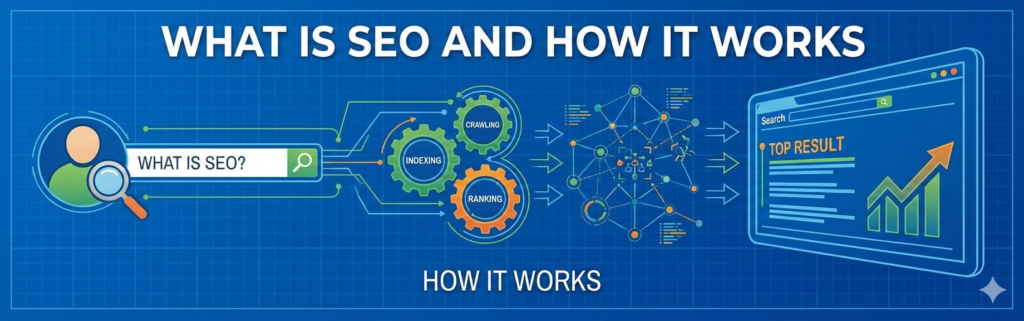
When someone searches on Google, the search engine:
- Crawls web pages
- Indexes content
- Ranks pages based on relevance and authority
SEO helps your site meet those requirements.
Key goal: Make your website easy to find, understand, and trust.
Google processes over 8.5 billion searches per day, and more than 25% of users click the first result. Ranking higher directly impacts traffic and leads.
Main Elements of SEO
SEO isn’t one tactic. It’s a combination of systems working together.
1. Keyword Research
Keywords are the search terms users type into Google.
Good keyword research helps you:
- Understand search intent
- Find demand-driven topics
- Build content that answers real questions
Example: Instead of targeting “scissors,” you might target:
- “Are safety scissors dangerous?”
- “How to sharpen safety scissors?”
Tools you can use:
For deeper strategy, see our guide on The Power of Keywords and Content in SEO:
https://weavelinx.com/the-power-of-keywords-and-content-in-seo-a-complete-guide/
2. On-Page SEO
On-page SEO improves elements directly on your website.
This includes:
- Title tags
- Meta descriptions
- Headings (H1, H2, H3)
- Internal linking
- Content quality
- Image alt text
Important: Avoid keyword stuffing. Google values clarity and usefulness over repetition.
3. Off-Page SEO
Off-page SEO focuses on authority.
This mainly involves:
- Backlinks from trusted websites
- Brand mentions
- Community engagement
It’s estimated that nearly 75% of SEO impact comes from off-page signals like backlinks.
If respected websites link to your content, Google sees your site as more credible.
4. Technical SEO
Technical SEO ensures search engines can access and understand your site.
It covers:
- Page speed
- Mobile responsiveness
- HTTPS security
- Structured data (schema)
- Crawlability
A slow or poorly structured site can block rankings—even with great content.
Learn more here:
https://weavelinx.com/technical-seo-the-key-to-a-successful-website/
How SEO Works?
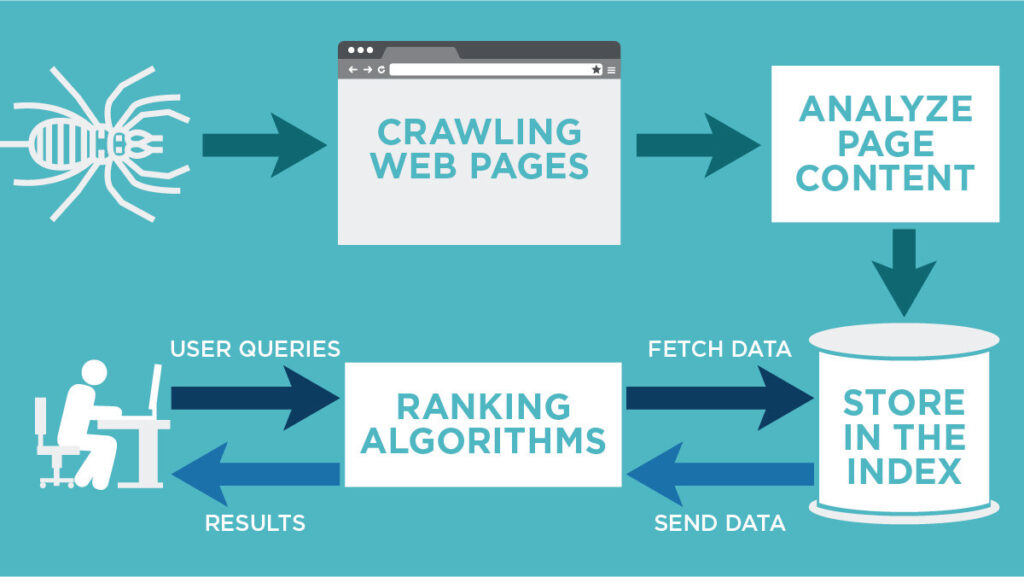
To understand how SEO works, you need to understand how search engines work.
Step 1: Crawling
Search engines use bots (crawlers) to discover web pages.
They follow links, read content, and detect updates.
Step 2: Indexing
After crawling, pages are stored in Google’s index.
If your page isn’t indexed, it won’t appear in search results.
You can monitor this using:
- Google Search Console
- URL Inspection Tool
Step 3: Ranking
When a user types a query, Google ranks indexed pages.
Ranking depends on:
- Relevance to the search
- Content quality
- Backlink authority
- Page speed
- Mobile experience
- User behavior (clicks, time on page)
Google uses hundreds of ranking signals. There’s no single “SEO trick.”
Types of SEO
SEO has multiple categories. Each serves a specific goal.
On-Page SEO
Optimizing content and HTML elements.
Off-Page SEO
Building authority through backlinks and trust signals.
Technical SEO
Improving performance and crawl structure.
Image SEO
Optimizing images with:
- Descriptive filenames
- Compressed formats (WebP <150KB)
- Clear alt text
As Mindy Weinstein noted:
“One of the often-overlooked SEO opportunities has to do with images.”
Video SEO
Optimizing:
- Video titles
- Descriptions
- Structured data
- Transcripts
Video content improves engagement and dwell time.
Local SEO
46% of all Google searches are looking for local information.
If you serve a region, local SEO helps you appear in:
- Google Maps
- “Near me” searches
- Local business results
This is critical for service businesses and SMEs.
SEO vs SEM vs PPC
Many people confuse these terms.
| SEO | SEM | PPC |
|---|---|---|
| Organic ranking | Paid + organic | Paid ads only |
| Long-term growth | Mixed strategy | Immediate traffic |
| No per-click cost | Includes ads | Pay per click |
SEO builds long-term traffic.
PPC (Pay-Per-Click) gives instant visibility.
SEM (Search Engine Marketing) includes both.
For sustainable growth, SEO usually delivers better ROI over time.
Why Is SEO Important?
Here’s why SEO matters:
- Builds consistent organic traffic
- Reduces reliance on paid ads
- Increases brand credibility
- Generates qualified leads
- Compounds over time
Google holds around 91–92% of the search engine market share. If you’re not optimized for search, you’re invisible to most online users.
SEO also improves user experience. Fast, structured websites convert better.
If you’re evaluating long-term strategy, see:
https://weavelinx.com/what-is-an-seo/
How to Get Started With SEO?
Here’s a practical roadmap.
1. Conduct a Technical SEO Audit
Check:
- Page speed
- Broken links
- Mobile usability
- Crawl errors
2. Perform Keyword Research
Find topics with:
- Clear search intent
- Moderate competition
- Business relevance
3. Create Quality Content
Focus on:
- People-first writing
- Clear structure
- Updated information
As Kristopher Jones says:
“No matter how niche your market is, great content remains a significant focus for SEO.”
4. Build Backlinks
Earn links through:
- Guest posts
- Case studies
- Partnerships
- Helpful tools
5. Track Performance
Use tools like:
- Google Search Console
- Google Analytics
- Google Tag Manager
Monitor:
- CTR
- Rankings
- Bounce rate
- Conversions
SEO is ongoing. It requires testing and iteration.
Want Help With SEO?
If you want a system—not random tactics—explore our SEO and growth services:
https://weavelinx.com/service/
We focus on:
- Clean technical builds
- Structured topic maps
- Measurable traffic growth
- Qualified lead generation
FAQs About SEO
1. How long does SEO take to work?
Typically 3–6 months for noticeable results. Competitive industries take longer.
2. Is SEO better than paid ads?
SEO is better for long-term growth. Ads are useful for short-term campaigns.
3. Does content length guarantee rankings?
No. Quality, relevance, and intent alignment matter more than word count.
4. Is SEO a one-time task?
No. It’s ongoing. Algorithms change, competitors adapt, and content needs updates.
5. Can small businesses benefit from SEO?
Yes. Especially through local SEO and niche targeting.
Final Thoughts: What Is SEO and How It Works
SEO is about clarity.
Make your website:
- Easy to crawl
- Easy to understand
- Easy to trust
When you align technical health, keyword intent, and authority building, rankings improve naturally.
If you want structured, performance-first SEO built into your product from day one, connect with Weavelinx:
https://weavelinx.com/contact-us/